Introduction
A dishwasher float switch is designed to last for many years, but in some cases it may fail repeatedly or stop working sooner than expected.
When a float switch keeps failing, the underlying cause is often related to debris, mineral buildup, or mechanical problems with the float assembly. Identifying the reason for repeated failure can help prevent the same issue from happening again after replacement.
What This Means
The float switch is activated by the float inside the dishwasher tub. As the water level rises, the float moves upward and presses a lever connected to the float switch underneath the appliance.
If the float cannot move freely or the switch is exposed to excessive wear or contamination, the internal contacts may eventually fail.
In many situations, the float switch itself is not the original cause of the problem. Instead, other conditions in the dishwasher may place stress on the switch or prevent it from operating correctly.
Mineral Buildup From Hard Water
Hard water minerals can accumulate around the float assembly over time.
This buildup can restrict the float’s movement and prevent it from rising or lowering properly. When the float becomes partially stuck, the switch may activate incorrectly or remain engaged longer than intended.
Over time, repeated strain on the switch mechanism can cause premature failure.
Cleaning the float area periodically can help prevent mineral buildup from interfering with the switch.
Food Debris Around the Float
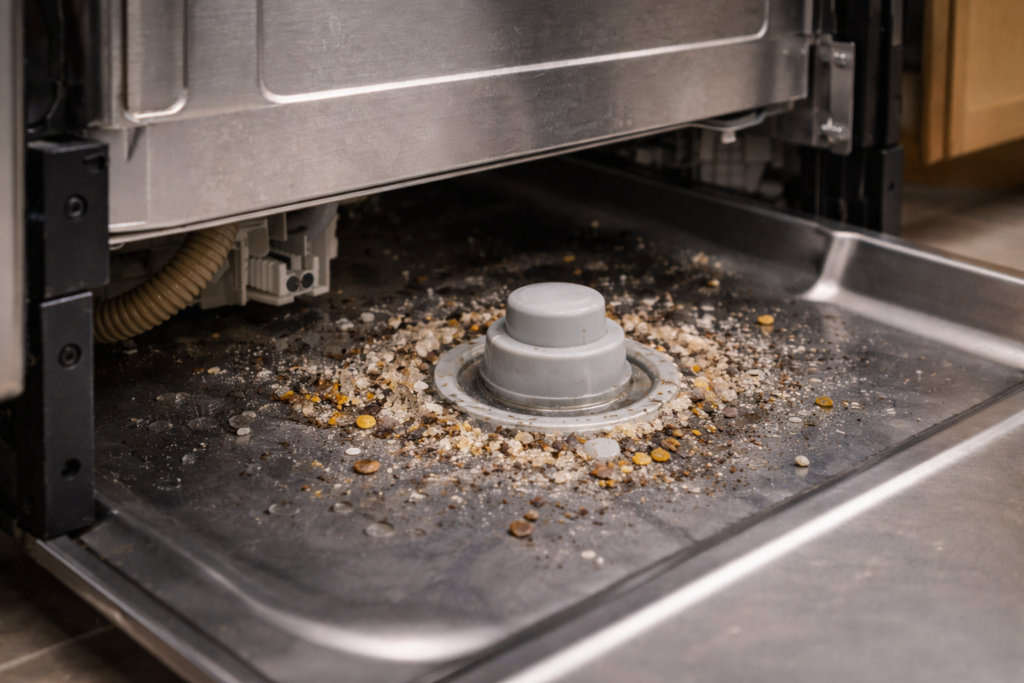
Small food particles or grease can sometimes collect around the float assembly.
When debris becomes trapped underneath the float, it may prevent the float from lowering completely. This can cause the float switch to remain activated even when the dishwasher is empty.
When the switch remains in the raised position too often, it may wear out more quickly.
Checking the float area during routine dishwasher cleaning can help reduce this risk.
Electrical Wear Inside the Switch
Float switches contain small internal electrical contacts that open and close during operation.
With repeated cycles over many years, these contacts can eventually wear down. When this happens, the switch may stop responding correctly when the float moves.
Electrical wear is one of the most common reasons float switches eventually need replacement.
Improper Previous Repairs
In some cases, previous repairs may affect how the float switch operates.
Examples include:
• Loose wiring connections
• Incorrect replacement parts
• Misaligned switch mounting
• Improperly installed float assemblies
If the switch is not mounted correctly, the float may not activate it properly.
Ensuring the replacement switch is installed correctly can help prevent repeated failures.
Damage From Water Leaks
Water leaking inside the dishwasher base can sometimes reach the float switch wiring or housing.
Prolonged moisture exposure may cause corrosion or electrical damage to the switch contacts.
If corrosion is visible on the switch or connectors, replacement is usually necessary.
For a full overview of symptoms, testing, location, and replacement, see the Complete Guide to Dishwasher Float Switches.
Related Guides
Signs a Dishwasher Float Switch Is Bad
How to Test a Dishwasher Float Switch
How to Replace a Dishwasher Float Switch