Introduction
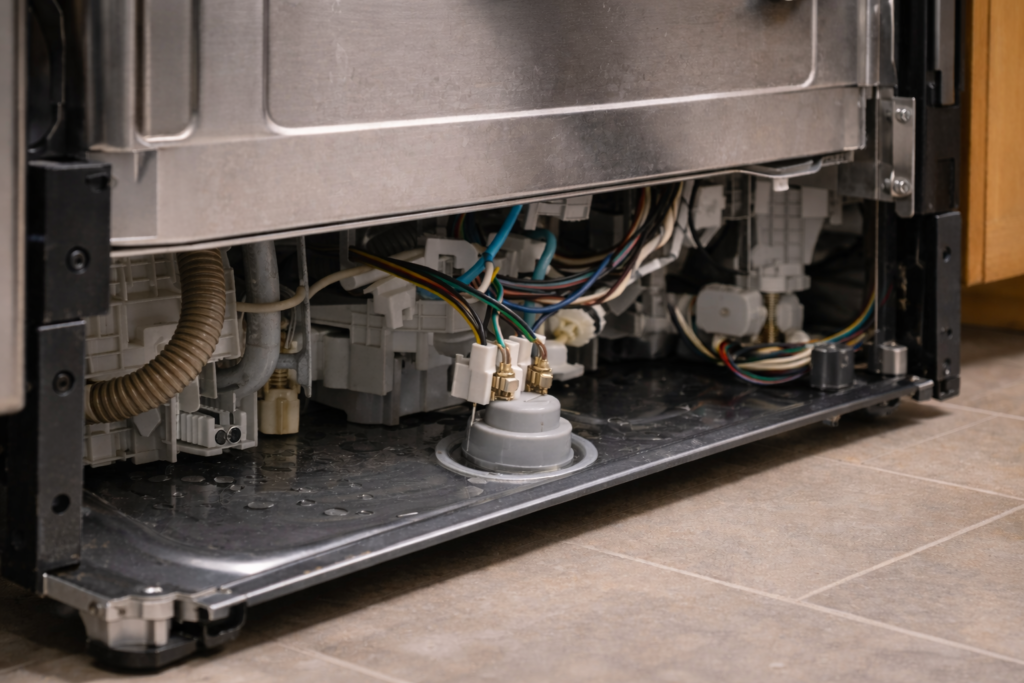
The dishwasher float switch is usually located underneath the dishwasher tub, directly below the float assembly inside the appliance.
While the float itself is visible inside the dishwasher, the float switch sits underneath the machine and is not visible from inside the tub. Knowing where the float switch is located can help when diagnosing filling problems or preparing to test the component.
What This Means
The float switch works together with the float inside the dishwasher to control the water level.
As the dishwasher fills with water, the float rises. When it reaches a certain height, it presses a lever connected to the float switch below the tub. The switch then signals the dishwasher to stop filling.
Because the switch sits underneath the dishwasher, accessing it normally requires removing the lower front access panel.
Where the Float Is Located
The float is the visible part of the system and can be found inside the dishwasher tub.
In most dishwashers, the float is:
• A small round plastic dome or cylinder
• Located on the floor of the dishwasher tub
• Positioned near the front corner of the appliance
You can usually lift the float gently with your fingers. It should move up and down smoothly.
If the float is stuck, it may prevent the float switch from working correctly.
Where the Float Switch Is Located
The float switch sits directly beneath the float assembly.
To access the switch:
-
Turn off power to the dishwasher.
-
Remove the lower front access panel at the base of the dishwasher.
-
Look underneath the tub directly below the float location.
-
Identify a small electrical switch with two wires attached.
The float inside the dishwasher presses a small lever or rod that activates this switch.
Accessing the Float Switch
Most dishwashers allow access to the float switch from the front of the appliance.
Typical access steps include:
• Disconnect power to the dishwasher
• Remove the two screws holding the lower access panel
• Lift or pull away the panel
• Locate the switch beneath the float assembly
In some models, additional insulation panels may also need to be removed.
Signs the Float Switch Area Should Be Inspected
Sometimes the float switch itself is not the issue. Instead, something may be preventing the float from moving freely.
You may want to inspect the float and switch if:
• The dishwasher will not fill with water
• The dishwasher stops mid-cycle
• The dishwasher overfills
• The dishwasher will not start
In these situations, testing the switch can help confirm whether the component is functioning correctly.
When the Float Switch May Need Replacement
If inspection shows the switch is damaged or fails electrical testing, replacement may be necessary.
Common reasons for replacement include:
• Electrical failure inside the switch
• Broken switch housing
• Corrosion on switch contacts
• Repeated dishwasher overfilling
Float switches are relatively inexpensive and are usually replaced rather than repaired.
For a full overview of symptoms, testing, location, and replacement, see the Complete Guide to Dishwasher Float Switches.
Related Guides
How to Test a Dishwasher Float Switch
How to Replace a Dishwasher Float Switch
How Much Does a Dishwasher Float Switch Cost?